
ABC Film Blowing Machine — Three-Extruder Co-Extrusion Explained
An ABC film blowing machine co-extrudes three film layers from three separate extruders through one die head. Each layer can carry a different material — for example LDPE, LLDPE and HDPE — giving barrier properties, stiffness and printability in a single bubble. ABC is one of the standard three-layer configurations; ABA achieves the same three layers with two extruders at lower cost. E-SHION does not position ABC as a standard stock configuration; we configure three-layer lines according to the required material combination.
What is an ABC film blowing machine?
ABC refers to a three-layer co-extrusion arrangement where all three extruders feed the same die. 'A', 'B' and 'C' simply label the three material streams. Because every layer is individually controllable, ABC lines are chosen when each layer needs a different material or additive — not when layers can share a single extruder.
The alternative three-layer arrangement, ABA, uses two extruders (outer layers share one stream) and is the economical choice for most bag and packaging films.
ABC vs ABA — which three-layer machine do you need?
The decision is material-driven, not layer-driven:
Most film and bag producers running three layers today use ABA because it covers the requirement at lower capital and running cost. If your product genuinely needs three different materials, an ABC configuration is the answer — tell us the three materials and we recommend the extruder package.
- ABA (2 extruders, 3 layers): outer layers share one material — best for LDPE/LLDPE bag film, garbage bags, shrink film
- ABC (3 extruders, 3 layers): each layer has its own extruder and can be independently formulated — useful when the three layers require different materials, additives or melt properties
- IBC 3-layer: ABA or ABC with internal bubble cooling for high output and wide film up to 2,600 mm folded
E-SHION three-layer options
E-SHION builds three-layer co-extrusion lines configured around your material mix — see the ABA and IBC 3-layer datasheets.
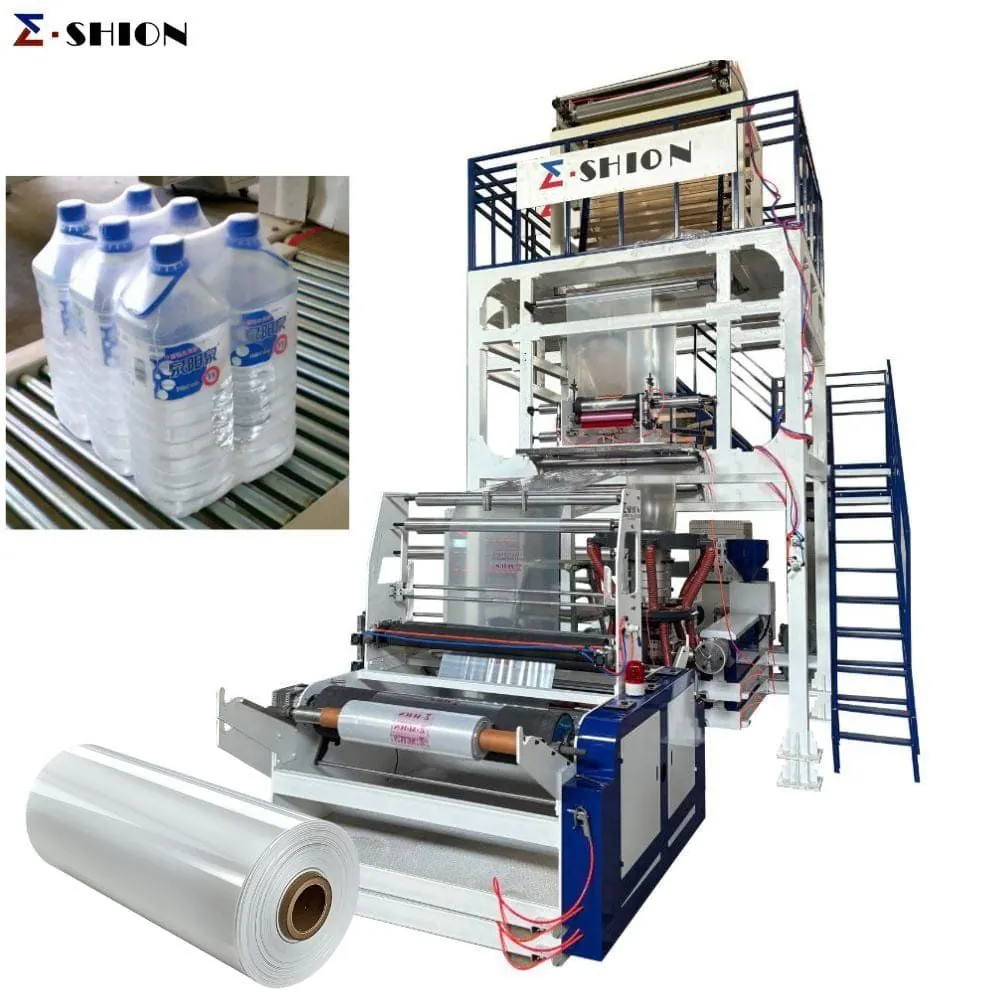
ABA Film Blowing Machine
The ABA film blowing machine has become a cornerstone in the plastic packaging industry. By utilizing a three-layer co-extrusion process with only two extruders, it offers a perfect balance between high-quality output and significantly reduced production costs.
Layer 3Width 100–1200 mmOutput 40–120 kg/h Best for Shopping bags · Garbage bags · Multilayer film with recycled core $35,000 – $90,000View datasheet →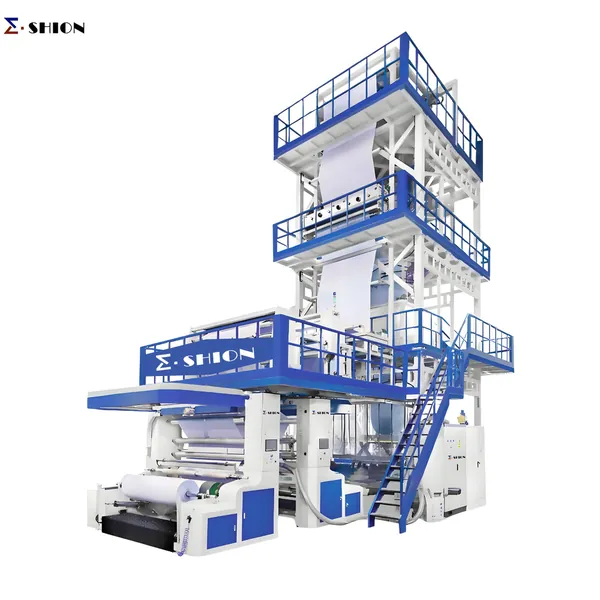 Model SJ-3
IBC 3 Layer Film Blowing Machine
Our IBC three-layer film blowing machine delivers uniform gauge and high clarity for LDPE, LLDPE, HDPE and EVA films — 500 kg/h output, 2600 mm folded width, ±5% tolerance, with internal bubble cooling, precision extrusion control and fully automated winding.
Layer 3Width 2600 mmOutput 500 kg/hThick 0.025–0.15 mm Best for Barrier film · Deep-freeze film · High-clarity film $60,000 – $150,000View datasheet →Watch them run
3 Layer Film Blowing Machine — Three-Layer Co-Extrusion IBC Blown Film Machine
Related pages
Frequently asked questions
What does ABC mean in a film blowing machine?
ABC labels the three material streams in a three-layer co-extrusion line: extruder A, B and C each feed one layer of the die. Each layer can be a different material or compound.
ABC vs ABA film blowing machine — what is the difference?
Both produce three-layer film. ABA uses two extruders — the two outer layers share one material stream. ABC uses three extruders so all three layers can be different. ABA is cheaper and covers most bag and packaging films; ABC is for products that genuinely need three different materials.
Do you supply ABC film blowing machines?
E-SHION supplies three-layer co-extrusion lines (ABA and IBC configurations) configured to your material mix. Send us the three materials and film spec — our engineers confirm the extruder package and price within 4 hours.
Is a three-layer machine better than monolayer?
Three-layer co-extrusion adds barrier, strength and printability without lamination. If your film must keep flavour in, resist moisture or run on a high-speed printing press, three layers usually justify the higher machine cost.
Get today's factory-direct quote for your ABC film blowing machine
Tell us film width, material and target output — a real engineer replies with options, pricing and a layout drawing within 4 hours.